1:
Introduction
Kantar’s Brand Z data has shown that brands with high cultural relevance grow nearly six times faster than those brands with low levels – a potentially highly valuable growth lever for brands to harness.
Building Box Office Brands: Cultural Relevance reveals TV and cinema remain where the majority of resonant entertainment moments happen.
2:
The study
Working with insight consultancy MTM, we combined expert interviews, in-depth conversations with cinemagoers, and a nationally representative survey to define cultural moments and understand cinema’s role within them.
We supported this work with additional effectiveness research conducted by eworks in foyers of cinemas across the UK.
3:
Defining cultural moments
Cultural moments are shared experiences that shape the wider conversation.
They have three defining characteristics:
- Shared: A defined event or piece of content that a lot of people engage with together (in-person or online)
- Discursive: Causes audiences to engage with others’ experiences of the moment and it transcends through the created discourse
- Time-bound: Has a defined peak where audiences engage with the content or event concurrently
4:
What cultural moments resonate most?
While all cultural moments share these attributes, they can vary significantly in scale, predictability and endurance.
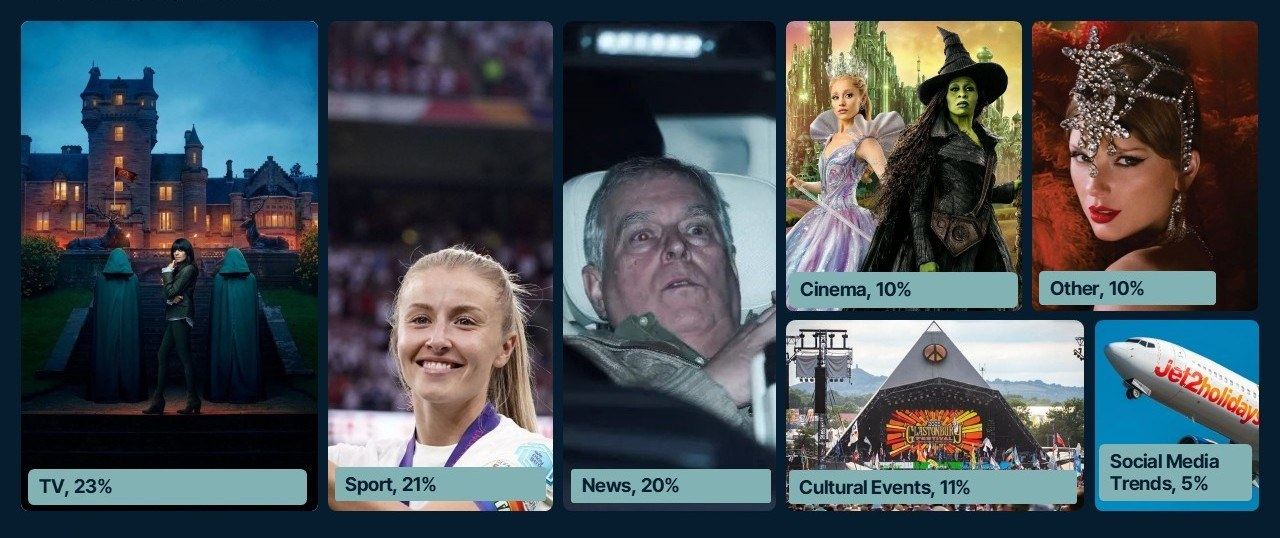
In February 2026, we asked people to recall up to 10 cultural moments from the previous 12 months that had got people talking.
Social trends such as 6/7 and Labubus may feel ubiquitous, but they accounted for just 5% of recalled cultural moments. Cinema delivered twice as many mentions, at 10%. TV and sport led overall, driven by The Traitors, Stranger Things and the Lionesses’ UEFA Women’s Euro 2025 victory.
5:
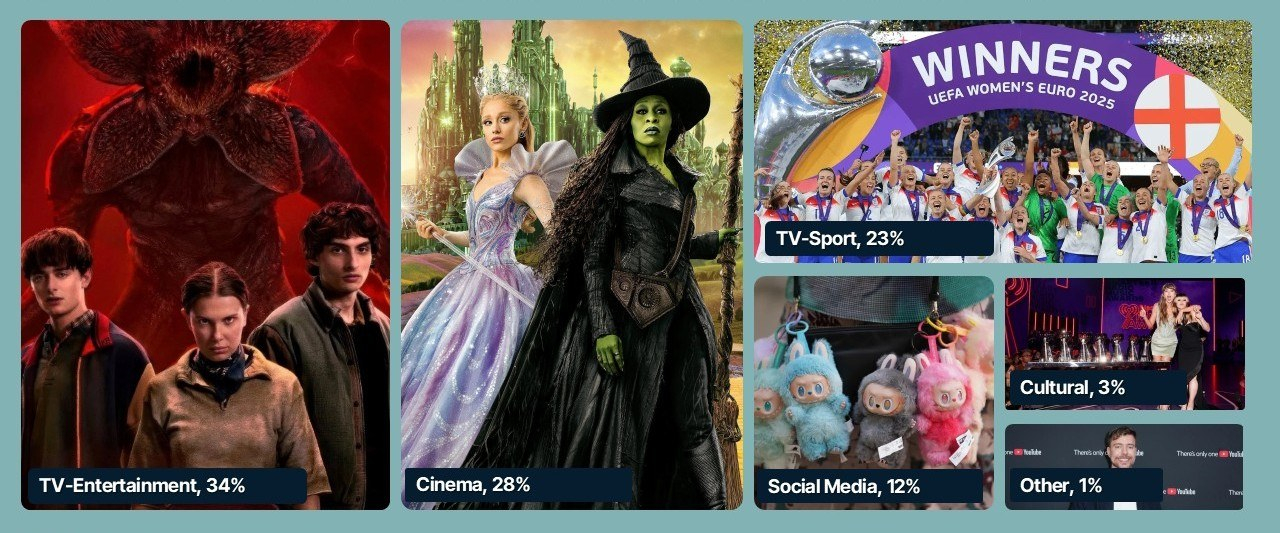
Not every cultural moment is commercially available
When we excluded moments that brands cannot advertise around, including BBC programmes and non-ad tier SVOD viewing, two routes stood out as the most powerful routes into resonant cultural moments: TV (through entertainment and sport) and Cinema.
6:
What makes cinema’s cultural moments unique?
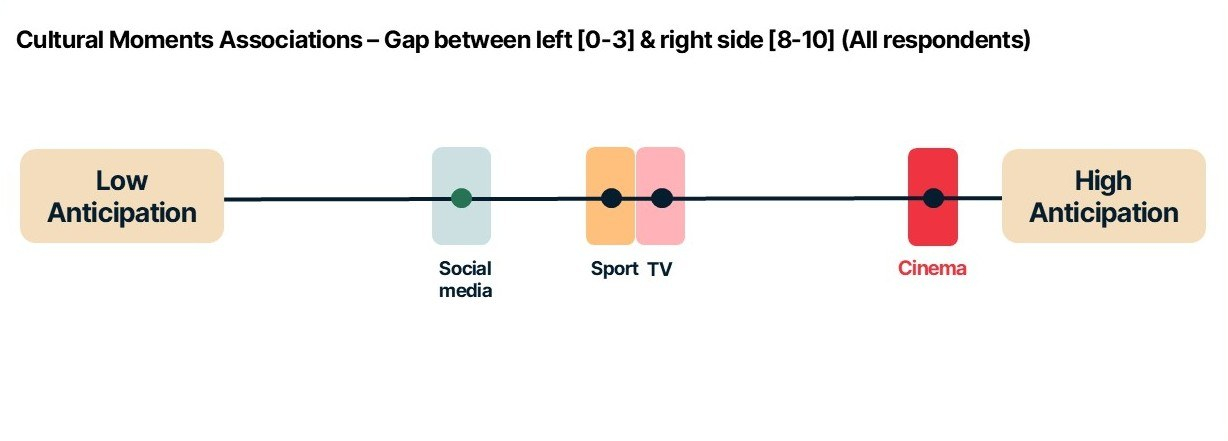
Cinema’s cultural power begins before the film begins: its biggest moments are highly anticipated.
When people rated different media from low to high anticipation, cinema emerged as the clear leader.
Films are events. Weeks and months of trailers, publicity and conversation build interest and excitement before audiences arrive.
Nothing builds anticipation and excitement quite like cinema.
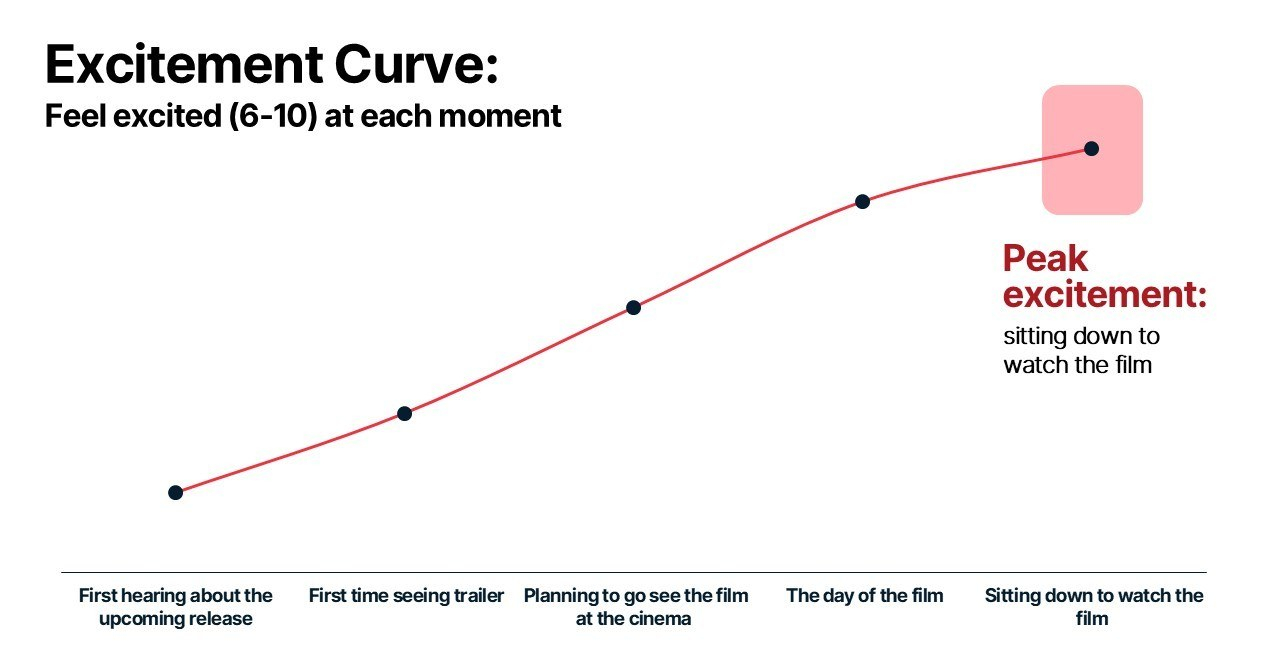
We asked people to think about their latest cinema visit and track their excitement from seeing the first trailer, through planning the trip, to taking their seat.
Excitement builds throughout that journey and peaks when audiences take their seats – exactly when your brand’s ads will be part of the experience.
7:
What does cinema deliver for brands?
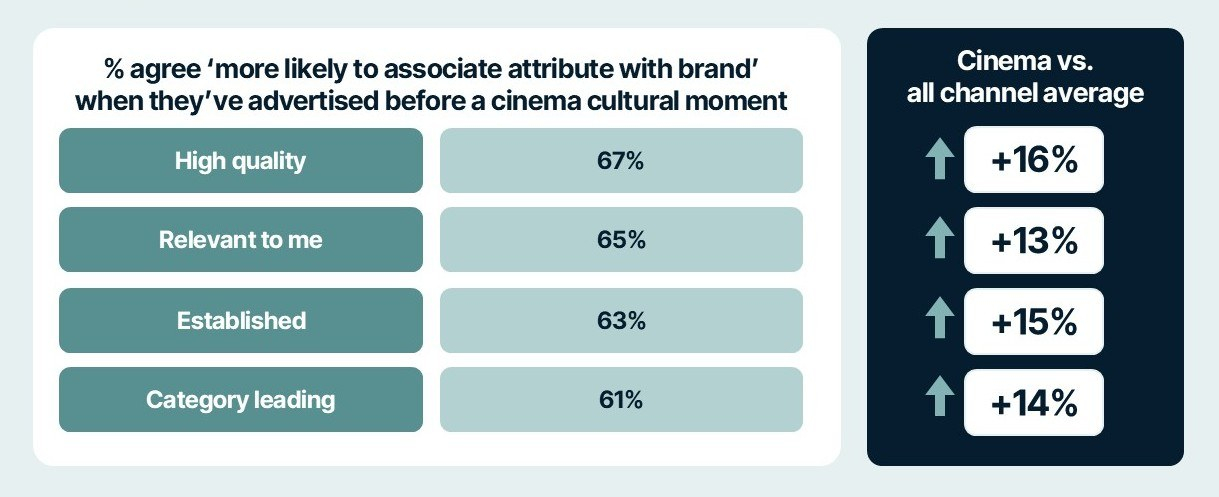
We asked which attributes people were more likely to associate with brands advertising before a cultural moment in cinema.
Cinema advertising most strongly signalled quality, relevance, establishment and category leadership – and outperformed advertising around cultural moments on other channels across these attributes.
Cinema can make a brand feel bigger. It gives challenger brands the stature they seek while reinforcing the status of established category leaders.
8:
Cinema maximises cultural relevance
Across the opening weekends of 4 major cultural moments (Wuthering Heights, The Devil Wears Prada 2, The Mandalorian & Grogu, Toy Story 5) we asked cinemagoers in-foyer whether the brands in the premium positions were a ‘relevant brand in British culture’.
We compared responses from cinemagoers before the film with those from a matched group leaving the screening.
Across the 9 brands tested, advertising before a highly anticipated title increased perceived cultural relevance by a huge 55%.
+55%
Cinema maximises cultural relevance
9:
In summary
- Cinema creates cultural moments that audiences anticipate, experience together, and remember.
- Anticipation and the positive emotional cinema experience create a high-value advertising environment for brands.
- Appearing before culturally relevant films can increase a brand’s own perceived cultural relevance.